From Ignored to Inexcusable: How Gaming Finally Started Holding Its Worst Players Accountable

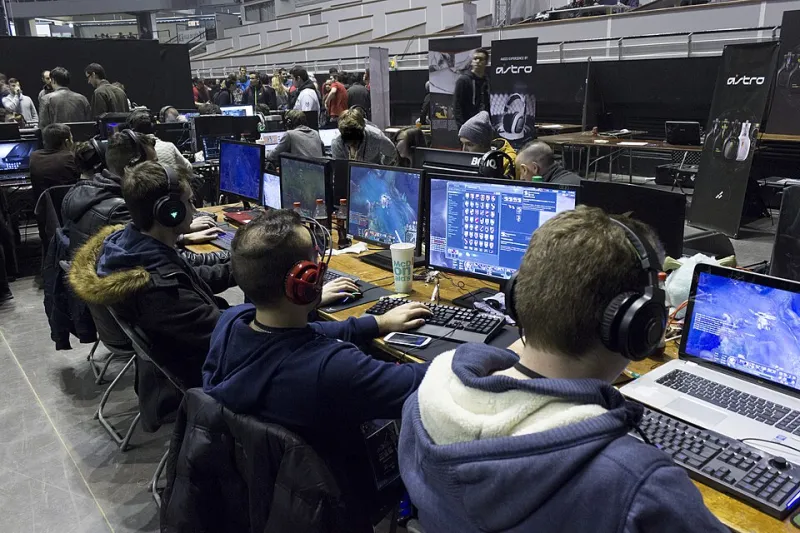
Photo: Evan-Amos, Public domain, via Wikimedia Commons
Let's be real about something: gaming culture had a serious problem, and for a long time, a lot of us just... looked away. Bad behavior in lobbies was the background radiation of online play. You muted, you moved on, you told yourself it was the cost of admission. Some of us even laughed it off as part of the culture's charm.
But something has shifted over the past several years — slowly, imperfectly, and sometimes only under significant external pressure. Platforms have started enforcing rules they'd previously treated as decorative. Communities have developed genuine norms around conduct. And the behaviors that once got waved away with 'that's just online gaming' are increasingly being called out, documented, and penalized.
This isn't a victory lap. There's still a long way to go. But it's worth looking honestly at six specific toxic behaviors that defined online gaming for years — and what accountability has actually looked like when communities and platforms have tried to address them.
1. Rage-Quitting in Ranked: The Original Sin
Abandoning a ranked match mid-game when things go badly was so common for so long that many players genuinely didn't see it as a problem. You were losing. You left. Everyone did it.
What changed the conversation wasn't moral arguments — it was mechanics. Games like Valorant, League of Legends, and Rocket League implemented escalating queue bans for serial abandoners, and the effect was noticeable. When the consequence became personal and immediate, behavior shifted. Players who'd been rage-quitting for years suddenly found the self-control to finish matches.
The lesson here is uncomfortable but important: appealing to sportsmanship didn't work. Making it inconvenient did.
2. Voice Chat Harassment: The Slowest Problem to Fix
Voice chat harassment — targeted abuse directed at players based on race, gender, sexuality, or just being perceived as an easy target — is probably the most documented and least solved problem on this list. The receipts are everywhere. The personal accounts from women and players of color describing what their average gaming session sounds like are genuinely grim.
Progress here has been uneven at best. Push-to-talk defaults, easier muting, and AI-assisted moderation have helped at the margins. Some communities, particularly around specific titles or Discord servers, have built genuinely inclusive cultures through active moderation. But the structural problem — that voice chat is still largely unmonitored and consequence-free on most platforms — hasn't been resolved.
When we talked to a moderator for a mid-sized gaming Discord with around 40,000 members, they put it plainly: 'We can handle our server. We can't handle what happens in the actual game lobbies. That's still a black box.'
3. Smurfing: The Behavior That Hides Behind Skill
Creating alternate accounts to play against lower-ranked opponents is one of those behaviors that its practitioners have always defended with elaborate justifications. Testing a new playstyle. Practicing with friends at lower ranks. Just having fun without the pressure of their main account.
What it actually does is ruin the experience for newer players — often people who are just starting to fall in love with a game — by dropping high-level players into their matches without warning. The data on player retention consistently shows that new players who encounter smurfs early are significantly more likely to quit.
The pushback has been real. Riot Games has been more aggressive about detecting and banning smurf accounts. Community attitudes have shifted, too — smurfing used to be almost a flex; now it's increasingly seen as something to be embarrassed about. That cultural shift matters.
4. Streamer Harassment and Targeted Raids
The practice of organizing groups to flood a streamer's chat with coordinated harassment — often targeting women, LGBTQ+ streamers, and streamers of color — got mainstream attention when several high-profile incidents forced Twitch to respond publicly. 'Hate raids,' as they came to be called, were both technically sophisticated and genuinely traumatic for the people on the receiving end.
Twitch's initial response was widely criticized as inadequate. The sustained pressure from affected streamers and their communities — including a streamer strike that generated significant press coverage — eventually pushed the platform toward more meaningful technical countermeasures and clearer policies.
A streamer who'd been directly targeted told us: 'The thing that actually helped wasn't a statement from the platform. It was other streamers talking about it publicly, refusing to let it get buried.' Community-level accountability, in other words, preceded and pressured platform-level accountability.
5. Ranked Toxicity and the 'It's Competitive' Defense
For years, 'it's ranked, people are going to be intense' was the blanket excuse for a range of genuinely abusive behavior — constant blame-shifting, deliberate sabotage of teammates, slurs deployed as insults. The competitive context was treated as a free pass.
Mental health advocates and researchers started pushing back on this framing, and their arguments found an audience. The idea that high-stakes competition requires or justifies abuse is not actually supported by anything. High-performing esports teams don't operate that way. The 'it's competitive' defense started to look less like an explanation and more like an excuse.
Platforms responded with behavior scoring systems and communication restrictions for players with poor records. Imperfect systems, but systems that signal a changed expectation.
6. Doxxing and Real-World Threats
This one is the most serious and, in some ways, the one where accountability has been most concrete — because it crosses into actual criminal behavior. Sharing personal information to facilitate real-world harassment has landed people in legal trouble, resulted in platform bans, and generated genuine law enforcement attention in documented cases.
The gaming community's relationship with this behavior has changed dramatically. There was a period where some corners of gaming culture treated doxxing as an acceptable tool of conflict. That normalization has largely collapsed, in part because the consequences became visible and real.
What Accountability Actually Looks Like
Looking across all six of these behaviors, a pattern emerges: cultural change alone doesn't move the needle much. Neither do platform statements. What actually works is a combination of consistent enforcement, community-level norms that reinforce platform rules, and consequences that are personal and immediate.
That's not a particularly satisfying conclusion. It doesn't make for a clean redemption arc. But it's honest about what the past several years have actually taught us about changing behavior in online spaces.
Gaming is better than it was. It's still not good enough. Both of those things are true, and holding them together is probably the most useful place to start the next conversation.