Bring Back the Couch: A Six-Player Game Night Survival Guide
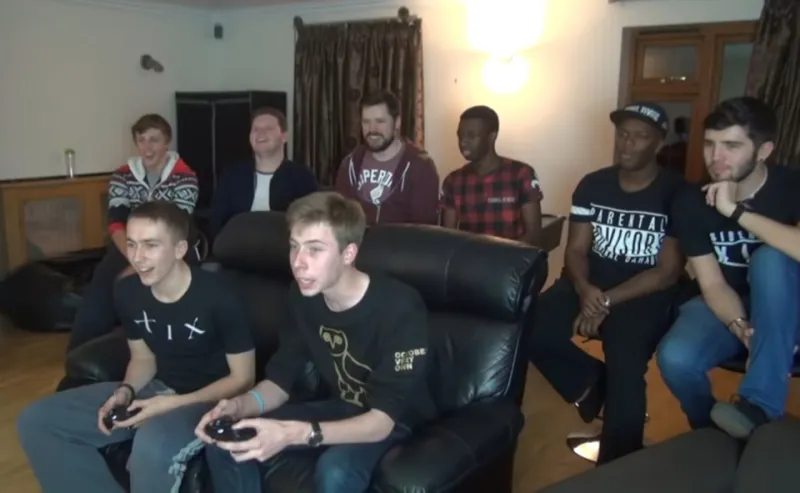
Photo: Calfreezy, CC BY 3.0, via Wikimedia Commons
There's a specific kind of chaos that only happens when six people are crowded around one screen, arguing over a shared controller, yelling at a character who just fell off a ledge. It's messy. It's loud. It's also one of the best ways to play games with people you actually like. And in 2026, the couch game night is making a quiet comeback.
This is not a nostalgia piece about the glory days of split-screen shooters. It's a practical argument. Local multiplayer is cheaper than ever to set up, streamers have made shared-screen chaos watchable again, and a generation of indie games has figured out how to make a room full of people laugh without requiring six separate consoles. The six-player game night is back — if you build it right.
Why Six Is the Magic Number
Four is the classic couch number. Two is the easy default. Six is where things get interesting. Six players create enough chaos for a party game to feel like a party, but not so many that one person gets lost in the shuffle. It's also a realistic guest list. You can fit six people around a TV without rearranging the furniture. You can order one pizza and still have enough slices. You can run a rotation where everyone gets a turn without the night turning into a tournament.
Six also maps neatly onto a lot of modern party games. Titles like Pico Park, Ultimate Chicken Horse, and Boomerang Fu scale well in that range. Jackbox packs are built for big rooms. Overcooked-style co-op games work best when the kitchen is just barely too small for everyone. The number isn't arbitrary. It's the sweet spot between intimate and chaotic.
The Streamers Making Couch Co-Op Feel Like a Party Again
Streaming has done something unexpected for local multiplayer: it made the couch look fun again. Couch co-op streams are inherently social. The audience isn't just watching a player; they're watching a room. The reactions, the arguments, the shared panic when a timer runs out — it all reads as content in a way that solo ranked grinding often doesn't.
That has a knock-on effect. Viewers see a group of friends laughing at a party game and think, I could do that. The barrier is lower than it's ever been. Most households already have a console or a PC, and a lot of the best couch games are inexpensive. You don't need six gaming PCs. You need one screen, enough controllers, and a group chat that can agree on a night.
Streamers have also helped by normalizing the idea that games can be short, silly, and social. Not every session needs to be a 40-hour campaign. A two-hour game night is a complete experience. That shift in expectations makes local multiplayer easier to sell to friends who don't consider themselves gamers.
Building a Rotation That Doesn't Fizzle
The mistake most game nights make is starting too big. Someone picks a complicated co-op campaign, everyone spends an hour learning the controls, and half the group checks out before the fun starts. A better approach is to build a rotation with a clear shape.
Start with something instantly readable. A party game with simple controls and short rounds gets everyone laughing early. Then move to a co-op game that asks for a little more teamwork. Finish with something competitive but light, so the night ends on a high note instead of a grudge. The exact games matter less than the rhythm.
A good six-player rotation might look like this: an opener that takes five minutes to learn, a main event that runs for an hour, a palate cleanser that lets people tap out if they need a break, and a closer that sends everyone home with a story. Keep the rules short. Keep the rounds shorter. If a game isn't working after two rounds, move on. The goal is a shared experience, not a perfect bracket.
The Host's Checklist
The host's job is mostly logistics. Make sure there are enough controllers and that they're charged. Know which games support six players before the night starts. Have a backup that works with fewer people in case someone cancels. Set up the screen so everyone can see it, and keep the seating close enough that people can actually talk to each other.
That last part matters more than it sounds. Couch co-op only works if the couch is part of the experience. If half the group is on a call and the other half is in the room, the energy splits. The best game nights are the ones where everyone is present, even if they're terrible at the game.
Keep the Screen Shared and the Guest List Small
The six-player couch night is not a cure for everything. It won't replace online multiplayer, and it won't work for every group. But it's a good corrective to a hobby that has become increasingly isolated. There's value in a night where the only algorithm is the group's sense of humor.
In 2026, the couch is not a relic. It's a venue. All it needs is a screen, a few controllers, and six people willing to be bad at a party game together. That's a pretty low bar for a good time — and a pretty good reason to bring the game night back.