Nobody's Watching Just You Anymore: The Multi-Stream Revolution Reshaping Fandom
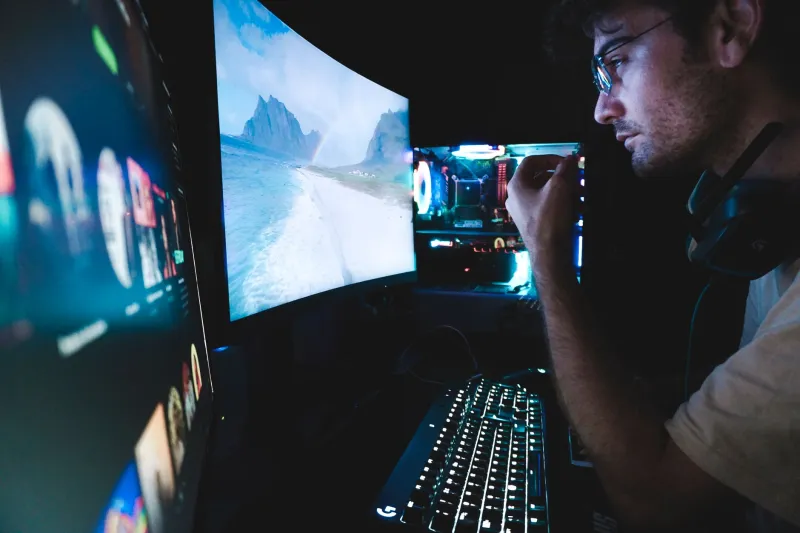
There's a pretty good chance that right now, somewhere in America, a viewer is technically watching you — except they're also watching five other people at the exact same time. One window for the FPS grinder, one for the cozy variety streamer, one for the esports tournament broadcast, maybe one more just because someone in Discord said "you gotta see this." Four, five, six tiles on a single monitor. Everybody gets a slice of attention. Nobody gets the whole thing.
This is the multi-stream era, and it's changing fandom in ways most streamers haven't fully reckoned with yet.
The Tech That Made Split Attention Normal
None of this would be possible without the tools that made it dead simple. Browser extensions like MultiTwitch and Kadgar have been around for years, letting anyone paste in a handful of channel names and generate a tiled viewing layout in seconds. Newer entrants have made the experience even smoother, with synchronized audio controls, individual volume sliders, and layouts that resize automatically depending on how many streams you throw at the wall.
On top of that, Twitch's own Squad Stream feature gave verified creators an official, native way to broadcast side-by-side with collaborators — essentially normalizing the concept of multi-presence for audiences who might never have thought to go looking for a third-party tool. When the platform itself starts building infrastructure around divided attention, that's a signal worth paying attention to.
High-speed internet being basically ubiquitous across most of the US doesn't hurt either. Buffering five 1080p streams simultaneously used to be a pipe dream. Now it's a Tuesday night.
Why Viewers Are Actually Doing This
Ask a multi-stream viewer why they do it, and the answers are surprisingly practical. Big live events are the obvious gateway. During a major tournament, you might want to follow the main broadcast while also keeping tabs on a specific player's perspective and a commentary channel that's known for better analysis. That's three streams before you've even had dinner.
But it goes beyond events. A lot of viewers have simply developed watching habits that mirror how they consume everything else online — tabbed, layered, parallel. The same person who has fourteen browser tabs open and a podcast playing in the background isn't going to suddenly give a single streamer their undivided attention for four hours. The behavior is consistent. The platform just caught up.
There's also a social dimension. Friend groups will sometimes all tune into the same cluster of streamers simultaneously, using multi-stream setups as a shared viewing experience even when they're not in the same room. It's the modern equivalent of flipping between channels — except everyone's doing it together over Discord.
What It's Doing to Chat and Community
Here's where things get uncomfortable for creators. Chat has always been the heartbeat of a stream. It's the thing that makes live content feel different from a YouTube video — the sense that you're in a room with other people, that the streamer might actually see your message, that something spontaneous could happen at any moment. That energy depends, at least partially, on a concentrated audience.
When viewers are spread across six channels, their chat participation fragments. Someone watching four streams simultaneously is probably only actively chatting in one — if that. The others are more like background noise. Passive consumption. The streamer sees a viewer in their metrics, but that viewer isn't really there in any meaningful community sense.
This dilutes the thing that made streaming communities special in the first place. Longtime fans who used to be regulars — the ones who showed up every broadcast, had running jokes with the streamer, helped onboard newcomers — are now semi-present across multiple spaces. Their loyalty hasn't disappeared, but it's been stretched thinner.
The Sponsorship Math Gets Messy
Brand deals in streaming have always been built on a somewhat fuzzy premise: that viewership numbers reflect actual attention. A channel with 10,000 concurrent viewers sounds impressive to an advertiser. But if a meaningful chunk of those viewers are running the stream in a corner tile while actively watching someone else, the attention value of that sponsorship read drops considerably.
This is a conversation the industry is only beginning to have out loud. Some sponsors are already pushing for more sophisticated metrics — click-through rates on stream-specific links, redemption numbers on promo codes, engagement signals that go beyond raw concurrent count. The old model of "eyeballs equals value" gets shaky when those eyeballs are literally pointed at six different things.
For mid-tier streamers especially, this creates a real problem. They're competing not just for viewers, but for attentive viewers — the ones who are actually in the chat, actually hearing the ad read, actually considering the product. That audience is smaller than the raw numbers suggest, and sponsors are starting to figure that out.
What Streamers Can Actually Do About It
The instinct might be to fight the trend — to demand exclusive attention, to build content that's so immersive it can't be background-tabbed. Some creators have leaned into long-form narrative streams, elaborate interactive elements, or viewer participation mechanics that require you to actually be paying attention to get anything out of it. That's one approach, and it works for certain audiences.
But the smarter play might be to stop treating divided attention as the enemy and start building for it. If someone's going to have your stream in a corner tile for two hours, what makes them want to keep it there? What makes them flip over to your chat when something happens? The question shifts from "how do I get all of their attention" to "how do I earn the moments when they choose to focus on me."
Collaboration is another lever. The same multi-stream culture that splits audiences can also concentrate them. When a cluster of creators are all live together — running the same event, playing the same game, doing something coordinated — they give viewers a reason to tile all of them at once. Suddenly divided attention becomes shared attention, and the community feel comes back.
Fandom Is Becoming a Portfolio
Maybe the most honest way to describe what's happening is this: being a fan used to look like a monogamous relationship. You had your streamer. You showed up. You were part of something.
Now it looks more like a diversified portfolio. Viewers have their core holdings — the one or two creators they genuinely follow and engage with — and then a broader set of channels they keep around for specific content or specific moods. They're fans of all of them, just in different ways and different degrees.
For streamers trying to build sustainable careers, understanding where they fall in that portfolio matters more than raw viewer counts. Being someone's top holding — the stream they actually watch — is worth more than being a background tile for a hundred thousand people who barely notice you're on.
The multi-stream era isn't going away. The tools are too good, the habits are too ingrained, and honestly? The content landscape is too crowded for anyone to realistically expect a full room of undivided attention anymore. The streamers who figure out how to be genuinely worth watching — not just technically live — are the ones who'll come out ahead.