The Roster Built for Everything: Inside Esports' Big Bet on Multi-Game Flexibility
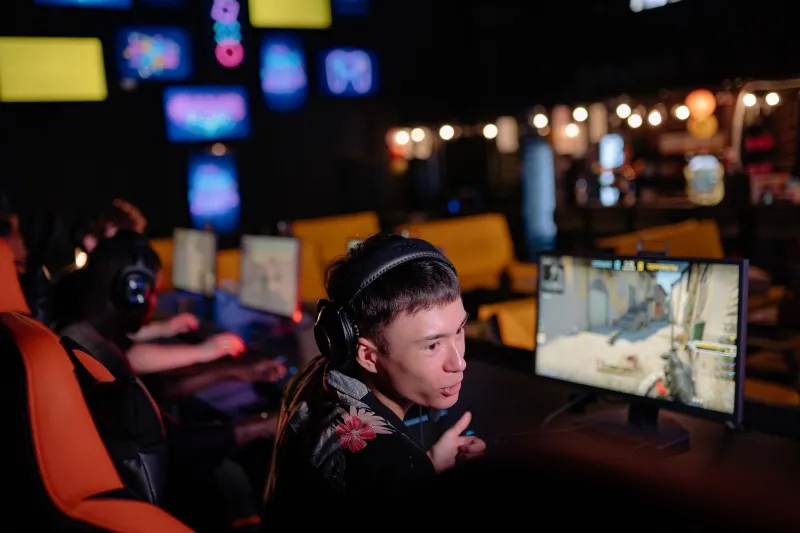
For most of competitive gaming's history, the formula was simple: pick a game, get really good at it, and don't look sideways. Organizations poured money into laser-focused rosters, coaches specialized in single titles, and players built entire careers — sometimes entire identities — around mastering one game and one game only.
That model is cracking.
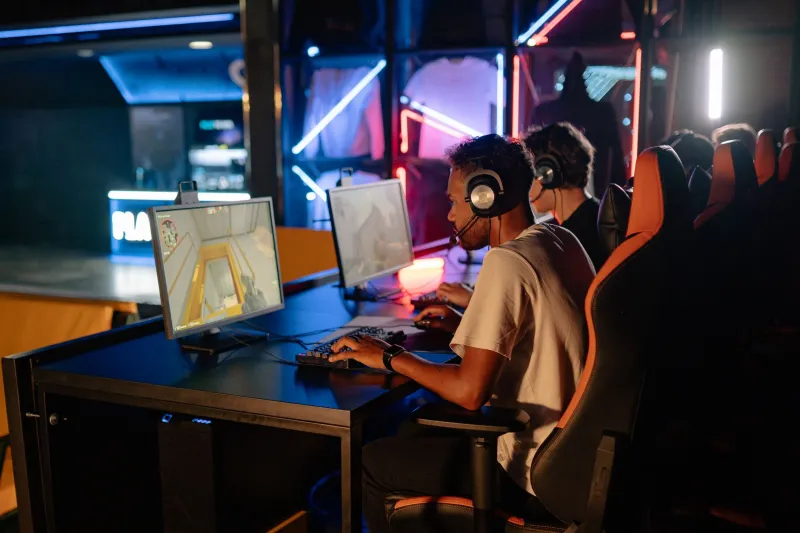
Across the upper tiers of North American esports, a different strategy is quietly gaining traction. Some of the most forward-thinking organizations aren't just fielding teams in multiple titles anymore — they're building rosters specifically designed to compete competently across six games at once. Not just dabbling. Not just having a Valorant squad and a League squad operating in totally separate silos. We're talking about deliberate cross-title infrastructure, shared training philosophies, and recruitment pipelines actively hunting for players who can flex across formats.
It's a fundamental rethink of what a competitive roster is supposed to be.
Why Six? Why Now?
The number isn't arbitrary. Esports organizations that have gone public or sought serious investment have learned that putting everything into a single title is a liability. Games die, publishers pull support, licensing deals collapse. When your entire operation is built around one IP you don't control, you're one bad announcement away from a very bad quarter.
Six titles represents something closer to a diversified portfolio. Enough games to weather a single title's decline, not so many that you're just throwing spaghetti at a wall. It's the same logic a financial advisor uses when telling you not to put your whole 401(k) into one stock — except the stock in question can be patched into irrelevance overnight.
"We stopped thinking about ourselves as a League of Legends org that also plays other stuff," one team operations director told us, speaking on background because their org hadn't officially announced the strategy. "Now we think about ourselves as a competitive gaming organization that happens to be active in six titles right now. The 'right now' part is important. That list can change."
The Utility Player Problem
Here's where it gets complicated. The old school of competitive gaming says that true excellence requires singular obsession. The players who reach the absolute top — the ones winning world championships and signing seven-figure contracts — almost universally got there by going all-in on one game for years. That kind of depth doesn't come from being well-rounded.
So when organizations start recruiting for adaptability, they're inevitably making a trade-off. The player who can hold their own in a tactical shooter, a battle royale, and a MOBA is genuinely impressive. They're also probably not going to be a world-class specialist in any of those three.
That's fine — if the org's goals align with that reality. Some teams aren't chasing championship trophies in any single title. They're chasing content deals, sponsor activations, and broadcast revenue across a broader footprint. A roster of highly versatile, entertaining, moderately competitive players might actually serve that business model better than one transcendent talent surrounded by specialists nobody outside the hardcore fanbase has heard of.
But for organizations that still want to win? The tension is real and nobody has fully solved it yet.
What Recruitment Actually Looks Like
Scouts and team managers working inside this new framework describe a pretty different wishlist than what you'd have seen five years ago. Raw mechanical skill still matters — obviously — but it's no longer the only thing on the checklist.
Coachability ranks extremely high. Players who can absorb new game systems quickly, who don't get precious about meta shifts, and who can transfer strategic instincts from one title to another are suddenly very attractive. One recruiting coordinator described it as looking for "game IQ that travels" — the ability to read a competitive situation and apply sound decision-making regardless of whether the game underneath it is a shooter, a strategy game, or something else entirely.
Personality fit has also become more critical. A player who thrives on routine and deep specialization is going to have a rough time on a roster that might ask them to switch primary titles mid-season based on tournament scheduling or sponsor obligations. Organizations are explicitly vetting for psychological flexibility during tryouts now, something that would have seemed almost beside the point a decade ago.
Training Infrastructure Gets Weird
Building a practice environment for six simultaneous titles is, by all accounts, a logistical headache. Standard team houses and training facilities were designed around the single-game model. Coaches who specialize in one title don't automatically translate. VOD review sessions get complicated when half the room is focused on a completely different game.
Some orgs have responded by hiring what amount to "meta coaches" — people whose job isn't to teach game-specific mechanics but to help players identify transferable competitive principles across titles. Think less "here's how to play this angle in Valorant" and more "here's how competitive information asymmetry works, and here's how that shows up differently across the six games we play."
Whether that kind of abstract coaching actually produces results is still very much an open question. The data set is small and the approach is new enough that nobody's drawing confident conclusions yet.
Is This Actually Working?
Honestly? Mixed results so far. Organizations that have leaned hardest into the multi-game flexibility model have generally maintained a solid mid-tier presence across their titles without breaking through to dominance in any of them. Which, depending on who you ask, is either proof of concept or a cautionary tale.
The teams that have pulled it off most convincingly tend to be the ones that were clear-eyed about their goals from the start. They weren't trying to win worlds in every game. They were trying to build a sustainable, sponsor-friendly competitive presence across a diverse title portfolio — and by that measure, some of them are genuinely succeeding.
The ones struggling are usually the organizations that tried to graft the multi-game strategy onto a culture that still secretly wanted to be a championship-focused single-title org. That identity conflict tends to surface fast and it isn't pretty.
The Bigger Picture
What's happening here is part of a broader maturation in how esports organizations think about themselves as businesses. The romantic era of "we play this one game and we live and die by it" is giving way to something more calculated, more diversified, and frankly more boring in the best possible way.
The six-game roster isn't a magic formula. It's a business strategy dressed up in a jersey. Whether it produces better competitors or just more adaptable corporate assets probably depends on what you think esports is actually for.
But it's not going away. If anything, as the competitive landscape keeps fragmenting and publishers keep launching new titles into an already crowded market, the organizations that figured out how to stay nimble across multiple games are going to look a lot smarter in five years than the ones that bet everything on a single title and hoped the publisher didn't pull the rug.
Flexibility is the new meta. Whether the players can actually keep up is the part nobody's totally sure about yet.