Here Today, Gone Next Patch: The Brutal Shelf Life of Gaming's Hottest Trends
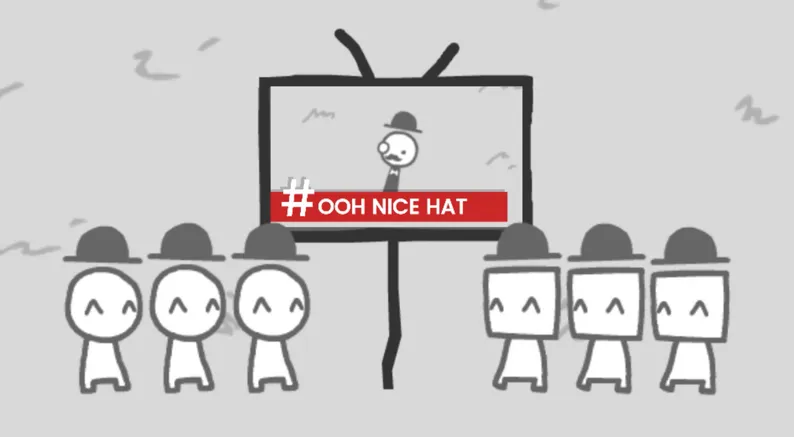
Photo: Nicky Case, CC0, via Wikimedia Commons
Remember when everyone was playing that one game mode? The one your whole friend group was obsessed with, the one streamers were grinding nonstop, the one that felt like it was going to be the thing for years to come? Yeah. Where is it now?
If you've been paying attention to gaming culture for more than a few years, you've probably noticed a pattern. Something explodes onto the scene — a new format, a viral challenge, a surprise indie hit — and for a few glorious months, it's everywhere. Then, almost without warning, the energy just... drains out of it. The streamers move on. The Reddit threads go quiet. The Discord servers start posting tumbleweeds.
This isn't a coincidence. It's a cycle. And it's running on a pretty predictable clock.
The Six-Month Countdown
Most gaming trends operate on a window somewhere between six months and a year. That's not a hard rule, but it's close enough to one that you can practically set a timer. A game launches with massive hype, pulls in huge concurrent player numbers, and dominates every content feed you scroll through. Then, right around the six-month mark, something shifts. A competitor drops. A big update either saves it or bungles it. The content well starts running dry.
This isn't unique to gaming — entertainment trends have always had expiration dates. But the gaming ecosystem accelerates everything. Players consume content at a ferocious pace. A streamer can put 200 hours into a game in the time it takes a TV show to air three episodes. When you burn through content that fast, the shelf empties quickly.
Platforms like Twitch and YouTube are partly responsible for this. Their algorithms reward novelty. A new game gets pushed to front pages, recommended to new viewers, and amplified by the platform itself. But that same algorithmic spotlight is a finite resource. Once the next shiny thing arrives, the traffic shifts, and creators follow the traffic. It's not personal — it's math.
Why Creators Can't Afford to Stay Put
Here's the uncomfortable reality for anyone trying to build a streaming career or a content brand in gaming: staying loyal to one trend is a career risk. When a game's viewership starts sliding, so does discoverability. A streamer who built their audience on a game that's now in its "ghost town" phase has to make a hard call — ride it out and watch the numbers fall, or pivot and potentially lose the community they built.
Most pivot. And honestly? You can't blame them.
The problem is that this creates a feedback loop. Creators leave a game, which accelerates the viewership decline, which causes more creators to leave, which tanks the game's presence on streaming platforms entirely. What looked like a thriving ecosystem six months ago becomes a handful of die-hard fans and a lot of empty lobbies.
For players trying to build sustainable careers — whether that's as a content creator, a competitive player, or even a community manager — this cycle is exhausting. You're essentially being asked to constantly restart. Build a new audience, establish new content pillars, learn a new game's meta, repeat. The treadmill never stops.
The Challenge Trend Problem
It's not just games themselves that expire fast. Content formats do too. Think about how many streaming "challenge" trends have come and gone. They pop up, get cloned by every creator with a camera, hit a saturation point where the joke stops being funny, and then disappear. The whole arc can happen in six weeks.
Game modes follow a similar pattern. A developer ships a limited-time mode that the community absolutely loses its mind over. Players beg for it to become permanent. The developer eventually does make it permanent — and somehow, making it permanent kills it. The scarcity was part of the appeal. Once it's always available, the urgency evaporates.
This is one of the stranger paradoxes in gaming culture. The things that feel most exciting are often exciting because they're temporary. The moment something becomes a fixture, it loses the energy that made it special.
What Platforms and Publishers Keep Getting Wrong
The industry has noticed this pattern, and it's tried to respond to it — mostly by manufacturing urgency artificially. Battle passes, seasonal content, limited-time cosmetics. The logic is sound: if scarcity drives engagement, build scarcity into the product. But players have gotten wise to this approach, and there's a growing fatigue around feeling like you have to play right now or miss out forever.
Publishers also tend to misread why something went viral in the first place. A game mode blows up because of emergent player behavior — some unexpected interaction, some community-created metagame that nobody designed intentionally. The publisher sees the numbers, tries to replicate the magic with a scripted version, and wonders why it doesn't land the same way. You can't manufacture organic.
Platforms, meanwhile, keep optimizing for clicks and watch time in ways that actively punish longevity. A game that's been out for two years might have a deeply engaged, passionate community — but it won't get algorithmic support because it's not generating the spike metrics that platforms use to decide what to promote. Steady and sustainable doesn't show up well on a dashboard built for explosions.
Building Anything That Actually Lasts
So what do you do if you're a player, creator, or community builder trying to survive this cycle instead of just getting chewed up by it?
The honest answer is that you stop trying to ride trends and start trying to build identity. The creators who last aren't the ones who were first on every new game — they're the ones who developed a voice, a style, a reason for people to show up regardless of what they're playing. The game is the vehicle, not the destination.
For competitive players, this means developing transferable skills rather than hyper-specializing in a single title's meta. Games die. Mechanical skill, game sense, and the ability to adapt? Those travel.
For communities, it means building around shared values and relationships rather than a single piece of content. A Discord server that exists to talk about one game will hollow out when that game fades. A community that exists around a shared sensibility will find the next thing together.
The gaming industry is obsessed with novelty, and it always will be. That's not going to change. But the people who figure out how to build something durable inside a novelty machine are the ones who are still here five years from now — while everyone else is chasing whatever just dropped this week.