Blink and You'll Miss It: How Six Seconds Became the Most Valuable Real Estate in Streaming
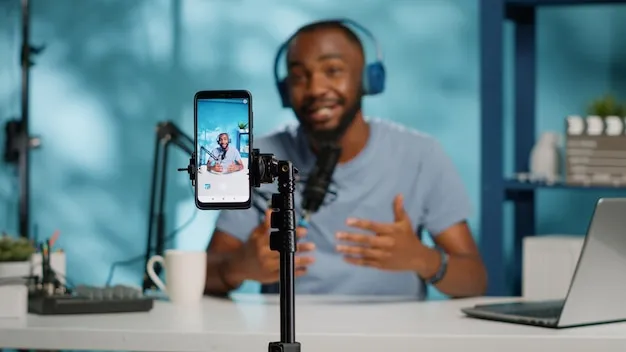
Photo: content creator recording short video clip smartphone gaming setup, via img.freepik.com
Picture the classic image of a successful streamer: headset on, energy drink in hand, live for six straight hours while hundreds of viewers hang out in chat. That image isn't wrong exactly — but it's incomplete. Because somewhere off-screen, a clip editor is already chopping that six-hour session into a six-second moment that'll hit three million views by morning.
Welcome to the new economics of streaming culture, where the shortest content often does the heaviest lifting.
The Long-Form Legacy and Why It Started Cracking
Twitch built its empire on the live experience. The appeal was always presence — the sense that you were watching something unfold in real time, that the streamer could see your chat message, that you were there for the moment when it happened. For years, that model dominated. Streamers like Ninja, Pokimane, and xQc built massive followings through consistency and sheer hours-on-screen dedication.
But the audience was already changing before anyone fully recognized it. Attention spans weren't necessarily getting shorter — that's a bit of a myth — but competition for attention was getting exponentially more intense. By the time TikTok hit mainstream adoption in the US around 2020, viewers had been conditioned by Instagram Stories, Vine (RIP), and YouTube Shorts to expect content that delivered its payload fast.
The streamers who adapted earliest didn't abandon long-form. They just got smarter about using short-form as a pipeline.
The Clip Economy: What's Actually Happening
Here's the mechanism that changed everything: discoverability. On Twitch, your live stream is essentially invisible to anyone who doesn't already know you exist. The platform's browse function has improved, but organic discovery remains brutally difficult. You're largely playing to an existing audience.
TikTok, YouTube Shorts, and Instagram Reels operate on a fundamentally different model. Their algorithms are designed to surface content to people who've never heard of you — and they do it through engagement signals that reward completion rates and shares over raw view counts. A six-second clip that gets watched all the way through and immediately shared carries enormous algorithmic weight.
For streamers, this created a new funnel: viral short-form clip → profile visit → Twitch or YouTube channel → live viewership. The clip isn't the destination. It's the advertisement.
"I grew my Twitch from like 40 average viewers to 400 in three months, and I barely changed what I was doing on stream," says Marcus T., a 24-year-old variety streamer based in Atlanta who asked us not to use his full last name. "What changed was that I started clipping every funny moment and posting it on TikTok the same day. People would show up to my next stream saying they found me through a clip. It was wild."
Marcus's experience isn't unique — it's practically a template at this point.
What Makes a Six-Second Clip Actually Work
Not all clips are created equal, and the streamers who've cracked the short-form code are surprisingly analytical about what they post. The viral clip formula, distilled from watching hundreds of successful examples, tends to follow a recognizable pattern:
Setup, reaction, punchline — all within the first breath. The clip doesn't ease you in. It drops you into the middle of something already happening and trusts you to catch up. The payoff arrives before your thumb can swipe.
Authentic emotional response — staged moments rarely perform as well as genuine ones. Viewers have a finely tuned radar for manufactured reactions, especially Gen Z audiences who've grown up watching both professional media and raw livestream content. The clips that blow up are almost always moments where the streamer forgot they were being recorded.
Audio matters as much as video — this one surprises newer creators. A clip with a great soundbite, a memorable verbal reaction, or a perfectly timed music hit will outperform a visually impressive clip with flat audio almost every time. TikTok is, in many ways, a sound-first platform.
Subtitles are non-negotiable — a significant portion of TikTok browsing happens with the sound off, particularly during commutes or in public spaces. Clips without captions are leaving viewers behind.
The Platform Breakdown: Where to Post What
Different platforms reward different clip lengths and styles, and smart streamers treat each one as a distinct channel rather than just copy-pasting the same content everywhere.
TikTok remains the king of raw discovery for gaming and streaming content in the US. The algorithm is genuinely democratic in a way no other platform matches — a creator with zero followers can go viral on day one. The sweet spot for gaming clips here is 15–45 seconds, with the most explosive moments front-loaded.
YouTube Shorts has become increasingly important as YouTube's algorithm began cross-promoting Shorts creators to long-form audiences. If you're trying to grow a YouTube channel alongside a Twitch presence, Shorts are arguably your best investment. The audience demographic skews slightly older than TikTok, which matters for certain games and content styles.
Instagram Reels tends to perform best for creators who have some existing social presence and are trying to deepen engagement with a lifestyle-adjacent audience. Pure gaming clips sometimes struggle here unless they tap into broader cultural moments — a clip of a game that's in the news, for instance, or content tied to a viral trend.
X (formerly Twitter) has seen a surprising resurgence as a clip-sharing platform, particularly for gaming moments. The retweet mechanic still drives rapid spread within gaming communities, and the platform's user base skews toward the kind of engaged, opinionated gamer who becomes a loyal viewer.
The Creators Doing It Right
Beyond Marcus, we spoke with several other emerging streamers who've built meaningful audiences through short-form strategy.
Jordan L., a 19-year-old horror game specialist from Chicago, described her approach as "clip-first streaming." Before she even goes live, she thinks about what moments are likely to be clippable. "I'll set up scenarios in games specifically because I know the reaction is going to be good content. It sounds calculated, but it's also just... good streaming? You're making the experience better for your live audience too."
David R., a 28-year-old Madden and NBA 2K streamer in Houston, took a different angle. He built his TikTok following primarily through educational content — short breakdowns of game mechanics, trade strategies, and roster analysis — and used that audience to funnel viewers toward his longer streams where he plays live. "My TikTok audience and my Twitch audience are almost the same people now," he said. "The short stuff taught them to trust me, and then they wanted more."
The Tension No One Talks About
There's a real conversation happening in streaming communities about whether the clip economy is changing the art of streaming itself — and not necessarily for the better. When streamers optimize their behavior for clippable moments, does the authentic long-form experience suffer? Are we training a generation of creators to perform rather than just be?
It's a fair concern. Some veteran streamers have pushed back on the short-form grind, arguing that the parasocial depth of a long-form live audience is something no viral clip can replicate. They're not wrong. The viewer who's been in your chat for two years has a different relationship with you than someone who found a TikTok and clicked through.
But the counterargument is equally valid: if short-form content is the door that brings new viewers into the ecosystem, the long-form experience is what keeps them. The two aren't competitors — they're partners in a content strategy that, when executed well, builds something sustainable.
What This Means Going Forward
The streaming landscape in 2025 is shaping up to reward creators who think in multiple formats simultaneously. The days of "I just stream and hope people find me" are effectively over for anyone serious about growth. The algorithm doesn't care about your hours-on-screen dedication. It cares about your last piece of content.
At SixOnePlay, we think that's actually an exciting development. The barrier to entry for streaming has never been lower, and the tools to turn a great moment into a viral clip are available to anyone with a smartphone and a decent game clip. The six seconds that launch a streaming career might be happening right now, in someone's basement in Ohio or a college dorm in Texas — they just need to hit post.
And then post it again tomorrow.