Your Ping Starts in a Cornfield: The Hidden Real Estate Behind Every Match You Play

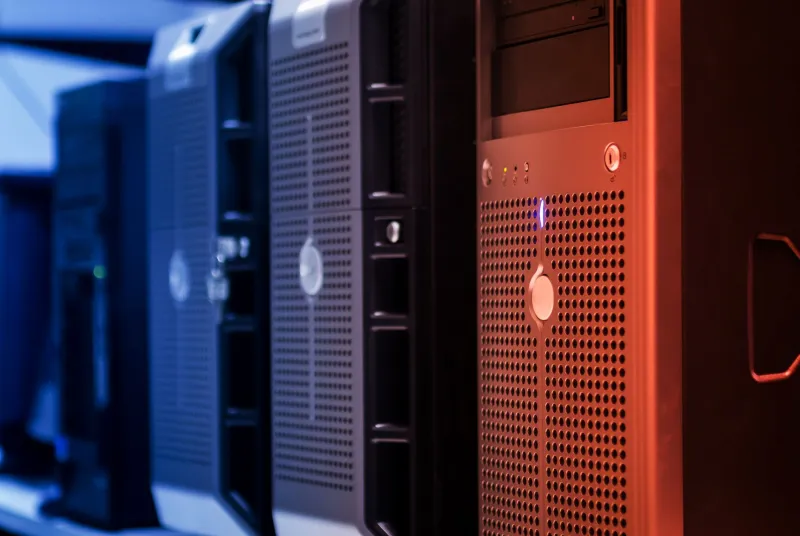
Photo by Photo by Jahanzeb Ahsan on Unsplash on Unsplash
You can blame your router all you want. You can blame the kid on your team who fed all game. But the truth is that a huge chunk of your online gaming experience was decided before you ever pressed start — by a real estate developer in Ohio, a utility company in Iowa, and a maintenance tech you'll never meet who swapped a dying hard drive at 4 A.M. last Tuesday.
Online gaming doesn't run on magic. It runs on buildings. Very specific, very boring buildings filled with humming racks, industrial cooling, and backup generators the size of school buses. And where those buildings sit has more to do with your ping than any ad your internet provider has ever run.
Why Your Favorite Game Lives in Ashburn, Virginia
There's a reason "Ashburn, Virginia" shows up in traceroutes for half the games you play. The small town outside Washington, D.C. is home to one of the densest clusters of data centers on the planet — a place the industry calls "the internet's capital." Cheap fiber, reliable power, and decades of infrastructure investment turned a sleepy patch of Virginia into the default home for game servers serving the East Coast.
Game publishers don't pick server locations for fun. They pick them where fiber runs cheap, electricity is affordable, and land can be leased by the acre. That's why the map of US game servers looks less like a population map and more like a map of power grids and tax incentives. Iowa and Oregon pull massive data center investment because hydroelectric and wind power keep cooling bills manageable. Texas has its own grid — for better and, as residents learned in 2021, for worse.
Every one of those decisions ripples straight into your matches. If you're in Atlanta and the nearest game server for your title is in Virginia, that's 15-20ms of latency baked into every shot you fire. If the publisher cheaped out and only runs West Coast hardware, enjoy your 80ms of phantom peeking.
The 4 A.M. Drive to Nowhere
Here's a part of gaming nobody streams: somewhere in a featureless industrial park right now, a technician is driving to a data center in the middle of the night because a drive in a game server array flagged as failing. They'll pull the bad unit, slot in a replacement, and the game you play tomorrow will never know anything happened.
That's the deal with modern infrastructure. It only works when it's invisible. The crews maintaining the racks that host your battle royale lobbies work overnight shifts precisely because that's when player counts bottom out and a server reboot won't kick 100 people mid-match. Hot-swapping drives, replacing swollen capacitors, rerouting traffic around a fiber cut — it's all routine, and it's all timed around your play schedule.
And it's not just the techs. It's the landlords negotiating power contracts, the facilities managers fighting with HVAC vendors, the utility crews upgrading a substation two years before a game publisher ever signs a lease. Your gaming experience is downstream of a hundred boring business decisions made by people who have never played a ranked match in their lives.
When the Landlord Decides Your Season
Every so often, the invisible layer becomes very visible. A generator fails during a heat wave and a whole region's lobbies go dark. A cooling system chokes during a Texas summer and matchmaking dies for six hours. A backhoe in a suburb cuts a fiber line and suddenly half your guild can't log in from Chicago.
These aren't "server issues" in the abstract — they're physical failures in specific buildings owned by specific companies, and game publishers often don't even own the hardware. They rent rack space from giants like Equinix and Digital Realty, which means your favorite live service game is, functionally, a tenant. When the landlord has a bad night, so does your ranked climb.
It also explains some of gaming's weirder inconsistencies. Why does one game feel buttery in Denver but laggy in Seattle? Different hardware, different buildings, different lease terms. Why did a publisher suddenly improve ping in the Southeast? They probably signed a new colocation deal. The patch notes never mention it, but your hands can feel it.
What This Means for You
You can't do much about where a publisher leases its racks. But knowing the geography helps. If you're getting unexplained latency, check where the game's servers actually live — community wikis and support pages usually list regions, and sometimes a manual server selection beats the auto-matchmaker. A wired connection to a server 600 miles away will beat Wi-Fi to one 50 miles away every time.
Mostly, though, it's worth a little respect for the unglamorous layer. The next time a match comes down to a photo-finish clutch, remember that the outcome traveled through a cornfield in Virginia, a cooling loop in Iowa, and the hands of a night-shift tech who made sure it all held together. Sixteen tons of server rack, and not one ounce of it gets a killcam.